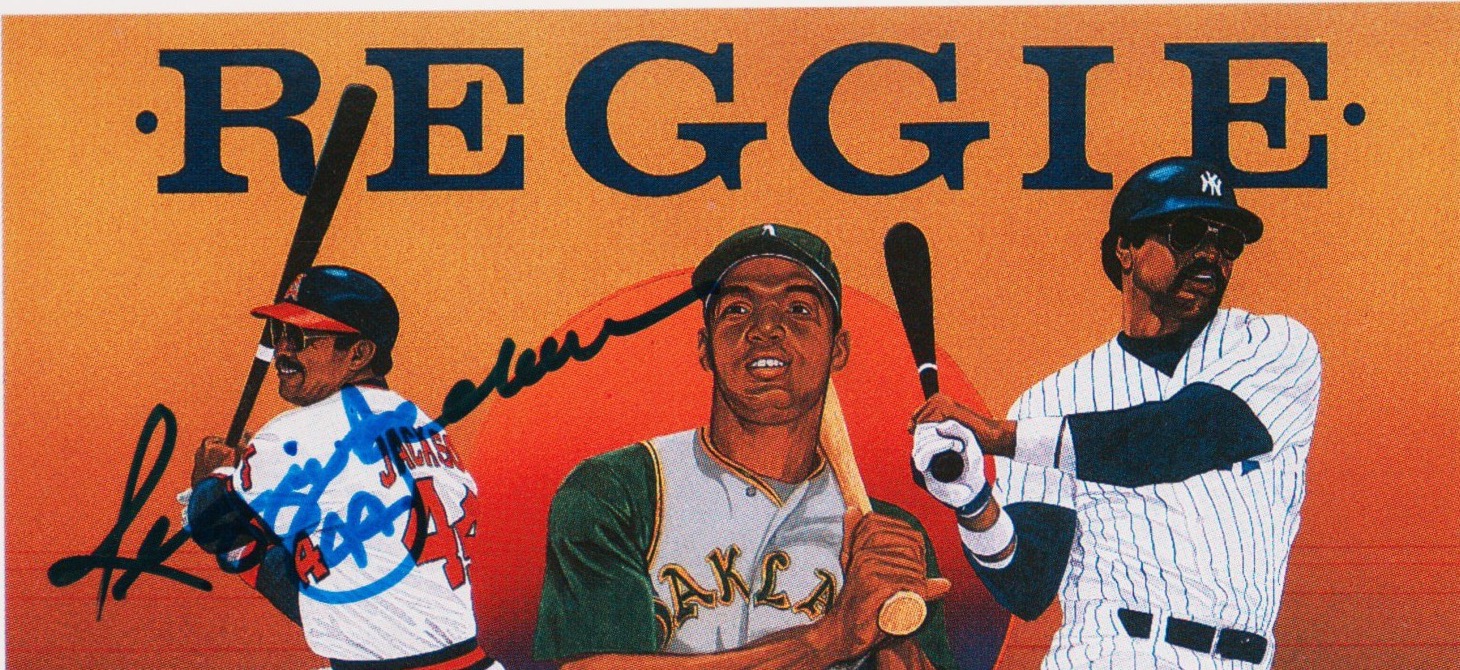
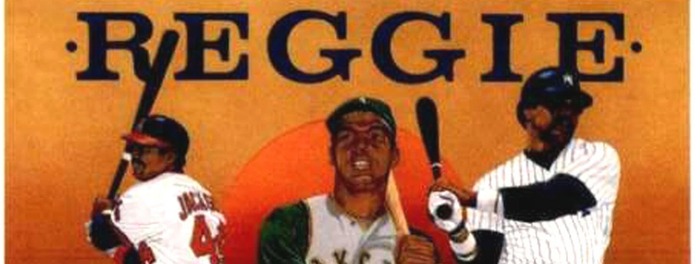
The 1990 Upper Deck Baseball Heroes checklist uses Vernon Wells’s drawing of Reggie Jackson. It came in packs in two versions: a common unsigned card and a limited autograph insert numbered to 2,500. They share the same artwork and design. The autograph, handwritten number and back hologram are the differences to check.
01
The official autograph insert
Upper Deck’s signed version has Reggie’s hand autograph on the front, a handwritten number in the form x/2500, and a diamond-shaped hologram on the back. This is the limited edition collectors mean when they talk about “The Reggie.”
02
The common unsigned card
The regular checklist has the same Vernon Wells artwork, a round hologram on the back and no hand autograph or x/2500 number as issued. It is the common version of the card, outside the 2,500-card autograph edition.
03
The common card signed later
Collectors sometimes had Reggie sign the regular checklist after pulling it from a pack. Look for its round hologram and unnumbered front when identifying that version.
A closer look
Same artwork. Check the autograph, number and back.
Both pack versions use the same illustrated checklist design. On the official autograph insert, look for Reggie’s hand autograph and x/2500 numbering on the front, then check for the diamond hologram on the back.
Front: the hand autograph
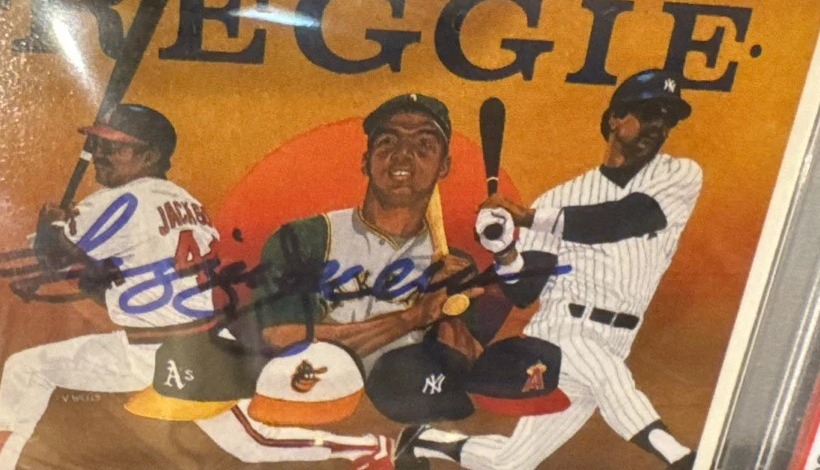
The blue autograph visible over the player at left is in ink. It is separate from the printed illustration. The official insert also has handwritten x/2500 numbering lower on the front, outside this crop. The common card was issued without that autograph or number.
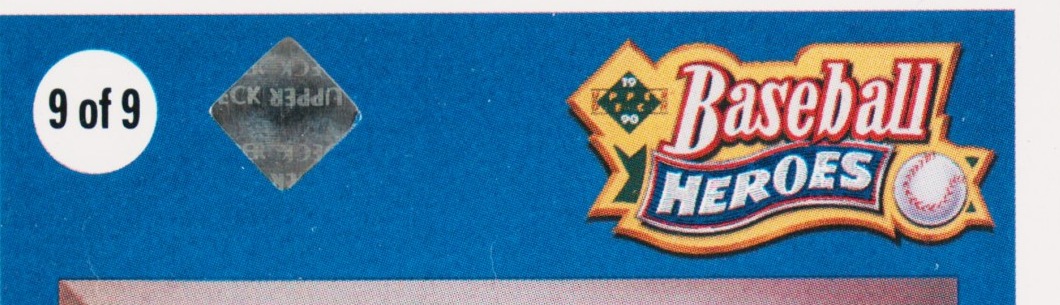
Back: find the hologram
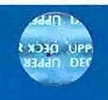
“9 of 9” places the checklist at the end of the Baseball Heroes series. The foil hologram beside it helps identify the version.
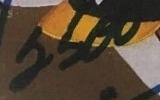
Front: numbering out of 2,500
This detail shows the /2500 part of the numbering. The individual serial is cropped out. For the complete serial number, see the source photograph or the full front of the card.
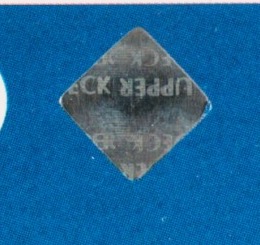
The diamond-shaped Upper Deck hologram appears on the reverse of the original numbered /2,500 autograph insert.
Round: common checklist
The regular checklist was issued unsigned and unnumbered. Some copies were signed by Reggie later.
Photographic details are cropped to show the features discussed. Images: numbered card at PSA and regular checklist on eBay. Hologram color and lettering can look different with changes in light and viewing angle. Always inspect complete front and back photographs of the card you are buying.
Before you buy
Get complete photographs of this card
Start with sharp front and back photographs of the actual card offered. Ask for close-ups of the signature, handwritten number and hologram when the main views leave a detail hard to read.
Find and read x/2500
Read the handwritten x/2500 number on the front. The printed “9 of 9” on the back gives the checklist’s position in the set. Earlier photographs of the same serial can help you follow its history and investigate differences.
Turn it over: diamond or round?
The original autograph insert uses a diamond-shaped hologram; the regular checklist uses a round one. A round-hologram card can carry a genuine later autograph, while remaining the regular checklist.
Read what was authenticated
Check whether the service evaluated the autograph, the card, or both. An autograph-only result can support a genuine signature without establishing membership in the original numbered edition. Match the holder and certification record to the card in the photographs.
Inspect the card and ink
Look at the corners, edges and surface in good light, as well as the clarity and condition of the autograph. Ask for surface photographs taken at an angle to the light. Fading or ink skips are condition questions; never retrace or enhance a signature.
Compare prices for the same version
Use documented sales of the original numbered insert when pricing that issue. Keep later-signed common cards, asking prices, bids and completed sales separate. Save the listing, photographs, date and return terms so you have a record of exactly what was offered.
Card edition and autograph authentication
The original autograph insert has Reggie’s hand autograph, a handwritten x/2500 number and a diamond hologram. The regular checklist was issued unsigned with a round hologram; a genuine autograph added later belongs to that version. Grading services can evaluate the card, autograph or both. Read the holder and certification record to see which service was used.
Compare the examples
Numbered issue: front detail; serial cropped out.
The numbered autograph issue
This example is labeled Checklist-Autograph, with separate card and autograph grades. The archived photographs show a handwritten x/2500 number and a diamond hologram. Compare those features with the card you are considering.
These front and back photographs show the common unsigned checklist: the same artwork, no hand autograph or edition number, and a round hologram. Having Reggie sign a card like this later would leave it outside the original /2,500 edition.
The holder gives the autograph a 10. Its front photograph leaves the handwritten /2500 number unreadable, and the hologram is obscured, so the card edition remains unresolved.
A label is useful evidence, but it should agree with the actual card. If the number or hologram is hidden, ask for a clearer view before buying it as the original insert.
How PSA, Beckett and CGC handle autographs
PSA
PSA’s FAQ directs pre-1998 autographed cards to its Card and Autograph Dual Service, which authenticates the card and signature and can grade each separately. For its 2026 Reggie Jackson signing, PSA also offered a Blue Label option covering the autograph only, without card authentication or grading. Read the label and certification record to see what PSA checked.
Beckett offers several services, from autograph authentication to a combined card-and-autograph grade. Its FAQ says a manufacturer-issued autograph may be graded by BGS without separate BAS authentication; collectors can request that extra service. Check what the holder and certification record actually cover, then compare the handwritten number and hologram with the original insert.
CGC offers sports-card grading and separate witnessed or JSA autograph services. Most manufacturer-issued pack autographs do not require JSA authentication, though CGC lists exceptions and says its guarantee does not cover the authenticity of pack-pulled signatures. Check the service named on the label, then identify the card itself.
Extra writing can make a card especially interesting. For “Mr. October” or another player’s name beside Reggie’s autograph, compare earlier photographs of that serial and check what the authentication covers. The other names are inscriptions; their authorship and timing need their own evidence.
A card grade and an autograph grade are different
Read the autograph grade and card grade separately. Auto 10 describes the autograph’s condition. The card may have a different numerical grade or an Authentic designation. Identify the numbered issue from the card itself as well.
Match the certificate to the actual card
Look up the certificate and compare its scans with the card offered: the autograph, handwritten serial, holder and description should agree. PSA warns that real certificate numbers can be copied, so check the pictured details too.
“The Reggie” is Upper Deck’s official 1990 Baseball Heroes #9 autograph insert, signed by Reggie Jackson and hand-numbered x/2500. It shares Vernon Wells’s artwork with the common unsigned checklist, but uses a diamond hologram instead of the regular card’s round one. A common card autographed later is a separate collectible.
Why does the Reggie matter to the hobby?
In 1990, a regular Upper Deck High Series pack gave you a chance at Jackson’s real autograph on a Baseball Heroes checklist numbered to 2,500. Signed cards existed before, but this one made collectors wonder whether the next pack held a superstar’s signature. Nolan Ryan and Hank Aaron autographs followed at Upper Deck; Score, Donruss and others built their own pack chases. The hunt that made the Reggie so exciting became a lasting part of collecting.
Read the story Was the Reggie the first autographed trading card?
No. Collectors could buy signed cards before 1990. The Reggie put a hand-numbered superstar autograph into Upper Deck’s regular High Series packs. Finding one while opening a pack was the thrill, and that surprise helped launch the autograph chase collectors know today.
“9 of 9” means the checklist is the ninth card in the Baseball Heroes series. The individual serial is handwritten on the front as x/2500. For the official autograph insert, look for that numbering, Reggie’s ink signature and the diamond hologram on the back. Catalog names include #9, AU1, Checklist-Auto and Checklist-Autograph. The separate introductory card advertises the promotion.
What should the original signed insert look like?
The same Vernon Wells drawing as the common checklist, with Reggie’s hand autograph and a handwritten x/2500 number added to the front, plus a diamond-shaped hologram on the back. The close-up above shows a blue ink autograph.
What does a circular hologram indicate?
The circular hologram belongs to the regular checklist, issued unsigned and unnumbered. Some collectors later had Reggie sign those cards. They’re a separate collectible from the numbered pack insert.
What does the diamond hologram identify?
The diamond-shaped Upper Deck hologram appears on the reverse of the original numbered autograph insert. On the front, look for Reggie’s hand autograph and handwritten x/2500 number. A grading label records which card and autograph services were used.
Are all “Mr. October” inscriptions on numbers ending in 00?
Beckett describes that pattern, but the photographs show exceptions: #775 has “Mr. October,” while #1500 has no inscription. Look at the writing on each card and compare earlier photographs when available.
What are the Babe Ruth, Willie Mays and Harmon Killebrew versions?
Some cards carry another player’s name beside Reggie’s autograph. #714 reads “Babe Ruth,” matching Ruth’s career home-run total, and #660 appears to read “Willie Mays.” A published report describes #573 as a “Harmon Killebrew” inscription, though its photo is too small to read fully. The added names are inscriptions; their authorship and dates remain unknown.
A diamond hologram is a clue, but the original promotion described hand-numbered cards. Without a number, don’t assume the card is one of the /2,500. Ask for clear photographs of both sides and an in-hand examination before paying for it as the numbered insert. We keep unnumbered reports separate from the numbered census.
The holder says “Auto 10.” Is the card a 10?
No. An autograph grade describes the signature’s condition; a card grade describes the card’s condition. A card can have an Auto 10 alongside a lower card grade, or no numerical card grade at all. Read the full label and certification record.
Does an authenticated autograph make it one of the original 2,500?
Read the holder’s service and card description carefully. An autograph-only holder covers the signature. At PSA’s 2026 Reggie signing, Blue Label covered the autograph only; Dual Service could evaluate the card too. For the original pack insert, compare the handwritten /2500 number and diamond hologram with the label and certificate photographs. Regular checklists signed later are a separate collectible.
The certification number checks out. Is that enough?
It is a useful first check, but compare the card and holder with the certification record and any available scans. PSA warns that genuine certification numbers can be copied. The handwritten serial, signature, card description and grades should match the item offered.
What photos should I request before buying?
Ask for clear, uncropped photographs of both sides and close-ups of the number, signature, hologram and grading labels. Edges, corners and an angled view of the surface help with condition. Save the listing URL and date, and ask for better photographs when a detail is hard to see.
How many still exist?
The surviving total is unknown. Upper Deck announced 2,500 numbered autographs; the census follows the copies reported since then. Grading populations offer another view, with repeat submissions and different card versions to account for. The dated figures are below.
See the dated census and PSA counts
In our September 26, 2026 Find the Heroes snapshot, 297 different handwritten numbers appeared across 299 reports. Some numbers have more than one report, and a report does not establish a separate surviving card.
On September 28, 2026, PSA listed 194 numerical card grades and 42 Authentic records in its specifically named Checklist-Autograph categories, including the separate Mr. October/Babe Ruth variety. These are PSA card records, not autograph-grade totals, and may include repeat submissions.
PSA records with a numerical card grade
Card grade
Records
PSA 3
2
PSA 4
2
PSA 5
13
PSA 6
34
PSA 6.5
1
PSA 7
18
PSA 8
63
PSA 8.5
1
PSA 9
59
PSA 10
1
Numerically graded
194
The Authentic records have no numerical card grade. Generic Checklist #1–9 rows are excluded because they do not isolate the /2,500 autograph. PSA’s categories also do not identify every card’s serial number or hologram.
Treat grading populations as submission records. A card can return for grading or move between companies, and categories can include different versions. Those overlaps keep us from turning the totals into a count of individual Reggies.
How do you compare reports of the same serial?
Find the Heroes has two reports under #1 and two under #1399. Their photographs show differences in handwriting, numbering and inscriptions. The reason for those differences remains unknown. Both reports are available on each card’s page.
First identify the version. Compare documented sales of numbered, diamond-hologram inserts with similar card and autograph condition. A common round-hologram checklist signed later is a different collectible and should be priced separately. Check whether an amount is an asking price, accepted offer or auction result, and whether a buyer’s premium is included. Extra inscriptions may affect value; one unusual sale is a poor guide to the whole edition.
Can the site authenticate my card from photos?
The buying guide can help you compare a card’s features and decide what to inspect more closely. Neither a census entry nor a forum opinion can authenticate a card from photos. For that, have a qualified examiner inspect the card in hand.
Can I share my card without sharing my identity?
Yes. You can use a public alias, and optional contact details stay private. We review card submissions and images before deciding what to publish or add to the census. Please share your own images or explain the permission you have to contribute them.
Yes. Signature condition and authentication are separate judgments. Skips, smearing, fading and wear can affect the autograph grade. Leave the ink as it is; retracing or enhancement can affect how a grading company treats it. Beckett’s standards explain the distinction.
What were the odds of pulling one?
Published estimates differ widely. Post War Cards gives about one autograph per 148 boxes, based on an assumed High Series production run. Sports Collectors Daily gives about one per 500 cases without showing its calculation. Using 36 packs per box and 20 boxes per case, those work out to roughly 5,328 packs (7.4 cases) and 360,000 packs (10,000 boxes). The assumptions matter: neither figure comes from an Upper Deck insertion-rate statement.
We don’t know. Upper Deck announced 2,500 signed, numbered cards. An August 1990 story said #2 was the lowest number packed and reported that Jackson kept #44; an October story said 2,500 went into packs. We haven’t found factory packing records that settle how many were available to pull.
The pictured High Number carton holds 20 boxes of 36 packs, with 15 cards per pack: 720 packs and 10,800 cards per case. The carton is marked 20/36 and the wrapper prints 15 cards. Those quantities help put published odds estimates into the same units.
How much 1990 Upper Deck was reportedly produced?
Post War Cards reports an estimate of about 200 million cards for High Series boxes. Its traceable basis is a 2017 Beckett forum scenario, reproduced by Fuji, that assumes one million copies per base card, half going into factory sets and an even split of low-series cards between pack series. Those assumed allocations produce the example’s 200-million-card total; this is not a documented Upper Deck print run for all 1990 product. At 540 cards per box, 200 million would be about 370,000 High Series boxes, or 18,500 of the pictured 20-box cases. Dividing those boxes by 2,500 advertised autographs gives roughly one per 148 boxes.
Could a Reggie still be hiding in an unopened pack?
Finding one in a sealed High Series pack is still part of the appeal. How many autographs and eligible packs remain unopened is unknown. Distribution, collectors’ choices and decades of storage all affect the boxes available today. The old estimates describe the original chase; opening a box today is a chance to discover what was left inside.